Multi-Vendor Normalization

Stop reconciling provider scores by hand.

Illustrative example: Provider A says high risk, Provider B says medium, Provider C returns no match. Multi-Vendor Normalization puts every provider's findings into one consistent view, so analysts compare the evidence and apply the same policy every time.


Example · Provider A: high risk
Provider B: medium risk
Provider C: no match
The problem
Providers disagree — and your analysts pay for it
Different taxonomies
Every provider scores risk on its own scale, with its own labels and thresholds.
Manual reconciliation
Analysts resolve conflicting results case by case, with no consistent standard — and review queues keep growing.
No single source of truth
When a regulator asks, it's hard to show which evidence actually decided the case.
How TrustOnChain fixes it

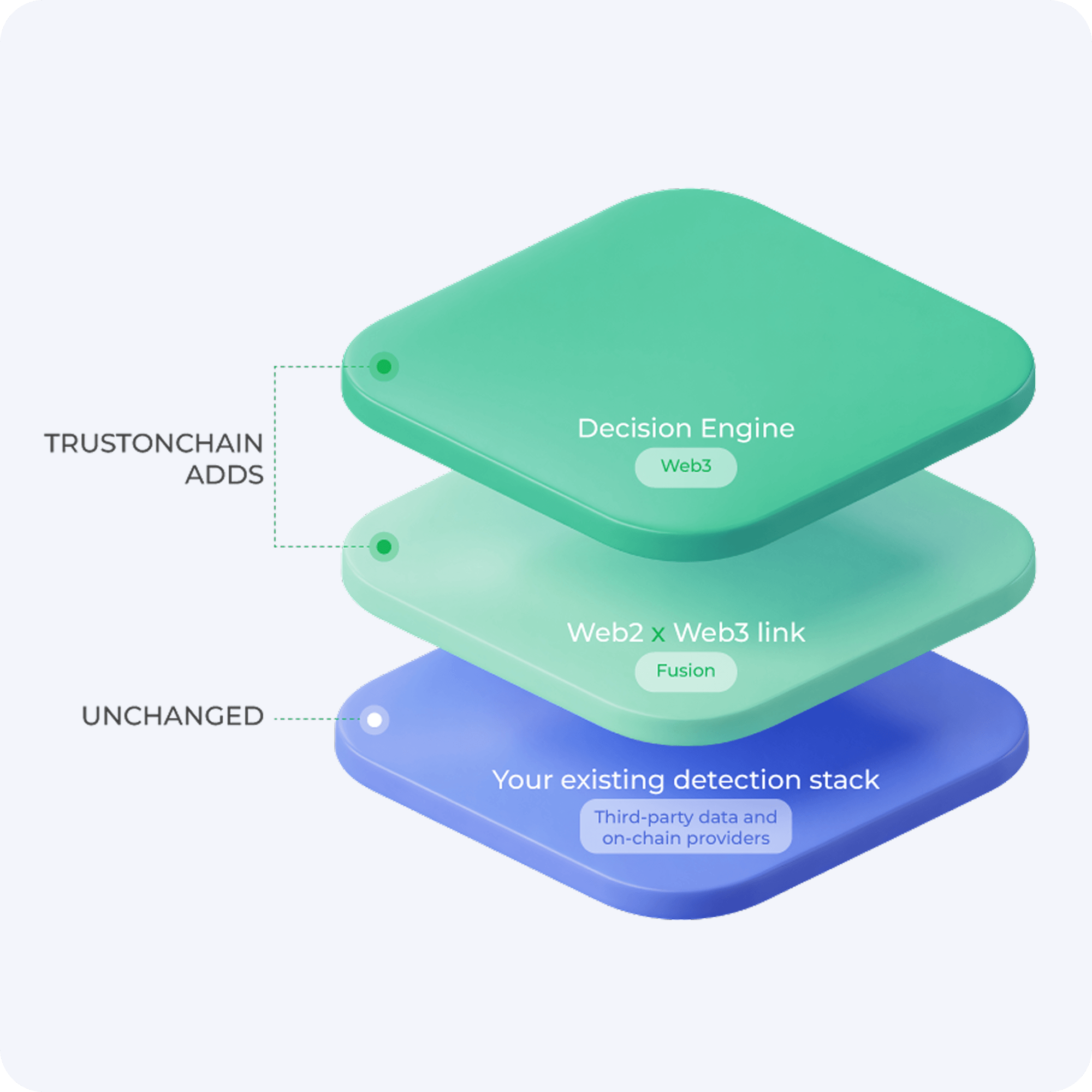
Three layers, one consistent view

01.
Foundation
Existing system

Your current providers and data sources — on-chain analytics and third-party risk data.

02.
TrustOnChain
Connect customer and wallet data

Links off-chain identity, payment and device signals to on-chain activity.

03.
TrustOnChain
Policy-based decision

TrustOnChain's on-chain risk model applies your approved policy to the combined findings.

See your provider findings in one view

Bring an example from the risk providers you use today, and we'll show you the reconciled view.